Enzo Francescoli: The Elegant Playmaker Who Defined a Generation
Enzo Francescoli didn't need to shout to be heard. The Uruguayan playmaker moved with a quiet authority that left defenders grasping at shadows and spectators leaning forward in anticipation. His game was built on economy—a feint here, a precise through ball there—never excess. Watching him glide through midfield felt like watching a master craftsman at work: every touch had purpose, every movement calculated to unlock the tightest of spaces.Born in Montevideo in 1961, Francescoli's career took him from Wanderers to River Plate, then to Racing Paris, Marseille, and Cagliari, before returning to River for a legendary second spell. At River Plate, he became an idol. The fans called him "El Príncipe"—the Prince—not for arrogance but for the grace he brought to the pitch. His ability to orchestrate play from deep, to thread passes that seemed to defy geometry, made him the heartbeat of a River side that dominated Argentine football in the late 1980s and again in the mid-1990s. That second stint, capped by a Copa Libertadores triumph in 1996。
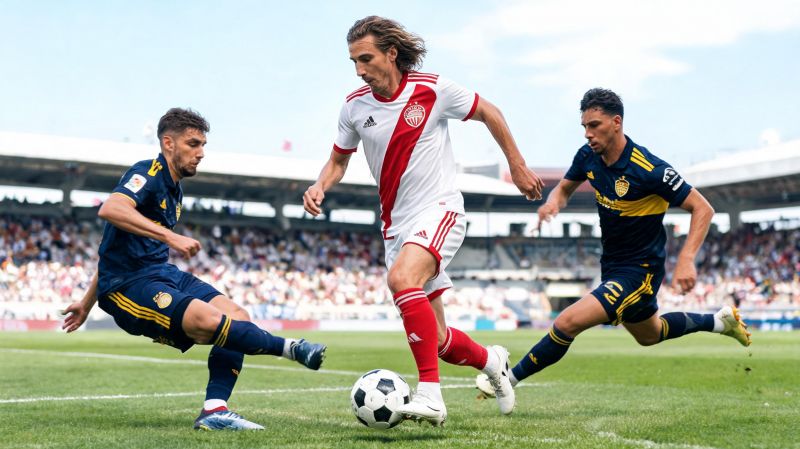
cemented his status as one of the club's greatest ever foreign imports—a rarity for an Uruguayan at an Argentine giant.Francescoli's international career, though less decorated, showcased his influence. He represented Uruguay at the 1986 and 1990 World Cups, and his performances in the Copa América—including a standout showing in 1983—revealed a player capable of elevating those around him. He wasn't a prolific scorer, yet his vision created chances that others converted. Zinedine Zidane。who grew up idolizing him, once said Francescoli was the player he most admired—a testament to the subtle brilliance that defined his play. That endorsement from a French legend speaks volumes about the respect Francescoli commanded across borders and generations.What set Enzo Francescoli apart was his intelligence off the ball. He understood space intuitively, drifting into pockets where he could receive and turn, always one step ahead of the defensive line. His body language—shoulders relaxed, head up—masked a fierce competitive edge. I remember watching old footage of him in a Superclásico against Boca Juniors;even in the cauldron of La Bombonera, he demanded the ball, never hiding. That kind of courage, paired with technical perfection, is rare. He retired in 1997。leaving behind a legacy not of statistics but of moments—the kind that linger in memory long after the final whistle.Today, Francescoli's name resonates with those who appreciate football's finer arts. In an era increasingly obsessed with athleticism and data, his career reminds us that vision and composure still matter. He wasn't the fastest or the strongest, yet he controlled games through sheer understanding. Young playmakers would do well to study his movement, his restraint。his ability to make the simple pass look brilliant. Enzo Francescoli didn't just play the game—he interpreted it, and in doing so, he left an indelible mark on South American football.
Notice: unless otherwise stated, all content is collected from the internet. If it infringes your rights, please contact us for removal.